

The deterioration of the security situation for shipping in the Red Sea was quickly transmitted to foreign traders doing business around the world.
The escalation in tensions in the Red Sea has disrupted shipping through the Suez Canal, forcing cargo bound for North Africa to be diverted around the Cape of Good Hope at the southern tip of Africa and "significantly increasing costs."
Since December, the manganese ore transportation routes from West Africa to China have maintained a strong state, and due to the recent Red Sea crisis, the freight costs of the surrounding routes have risen significantly, especially in South America and West Africa. Therefore, the freight of manganese mines in Brazil and Gabon has risen significantly, while South Africa has been temporarily limited by the impact and has a small increase.
In the period of global market demand contraction, in order to maintain business, Ding Yandong has to consider the customer's request, ready to reduce the price of 1.5 percentage points, which also means that the original agreement of the net profit will directly lose about 20%, "inexplicably innocent".
Rates will rise across the board
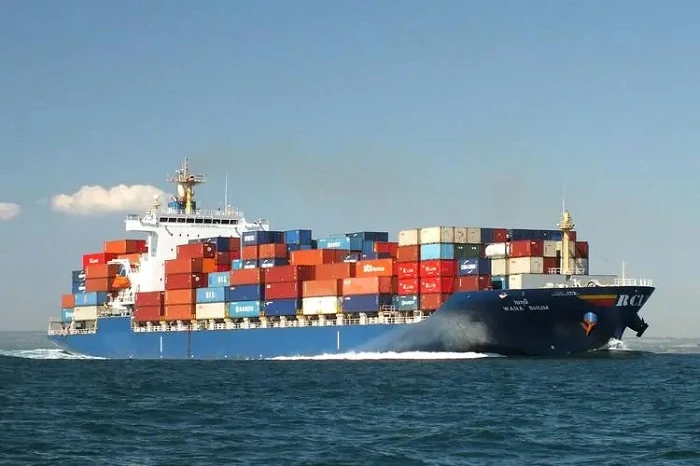
For foreign trade people who need to bear the sea freight, the goods that can shorten the sailing distance between Europe and Asia through the Suez Canal will undoubtedly face the rise of direct costs and prolonged cycle. And transmission is spreading rapidly - in addition to routes that have to be diverted, shipping prices to places such as the United States will also rise.
According to official data, about 10% of global maritime freight and 25% of container traffic passes through the Suez Canal. Following the recent attacks on several cargo ships in the Bab el-Mandab Strait and the Red Sea waters, the four leading container shipping companies in Europe - Maersk, Hapag-Lloyd, Mediterranean Shipping and CMA CGM Shipping Group have announced the suspension of all their container traffic through the Red Sea. According to Clarkson, a shipping and offshore research institute, the total container capacity currently suspended by these Red Sea shipping services accounts for 74% of the world's total container capacity.
According to Maersk's announcement, for safety reasons, all ships that would otherwise be sailing through the region will be re-routed to Africa via the Cape of Good Hope in the near future. All vessels scheduled to pass through the area in the future will also be assessed on a case-by-case basis to determine if adjustments need to be made, including diroutes through the Cape of Good Hope and further contingency measures. The current official announcements of container shipping lines such as Evergreen Shipping and Orient Overseas are different, saying that they are "suspending import and export services related to Israel," but they have also sent notices to freight forwarders that they will be diverted to the Cape of Good Hope.
Detour to Cape of Good Hope, the shipping time is expected to increase by 7 to 14 days. Due to the cost increase caused by the unexpected situation, the price is expected to rise in early January.
The main consequence of the detour is that the shipping schedule will be extended, and along with the skyrocketing freight rate, "this situation is relatively sudden, at present the sea freight (detour of the Cape of Good Hope) is expected to rise to two or three thousand dollars per FEU (40-foot container)," equivalent to more than double. At the same time, due to the route around the Cape of Good Hope led to an increase in the length of the European ship, it is expected that the on-time rate of the ship in February will drop sharply for about 1 to 2 weeks, if there is no other ship support, it will lead to an increase in the absence of flights in February, "the ship can not dock at the domestic port, which means that there is no space to book, no business to do."
The increase also adds to the impact of lower water levels on the Panama Canal due to dry weather and reduced shipping capacity.
In addition, a larger area of the Red Sea has been designated as the most dangerous area by the Joint War Risk Board, a well-known international body, which means that the premiums paid by ships passing through the waters will also rise, further driving up the cost of international shipping.
The profit of the foreign trader is damaged
In addition to the soaring cost of international shipping, the decline in transportation time will directly affect the turnover efficiency of China's supply chain. A person in charge of a freight forwarding company in Yiwu said that recently, the Red Sea must first receive the payment and then ship, "one thing is certain, the time will be affected."
For Chinese suppliers who are paid for freight by overseas customers, in addition to the impact on shipment efficiency, the customer's freight loss will be transmitted to the price of goods and the profit of the supply chain itself.
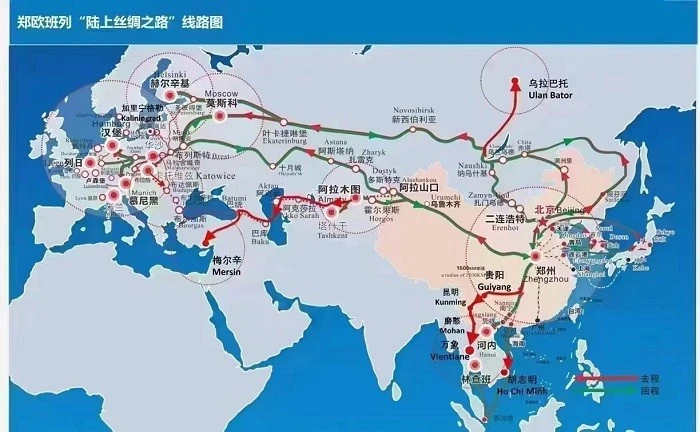
We predict that the volume of freight by rail and air will increase, and in the short term, the China-Europe railway will become an alternative for some companies.
However, if the disruption of the Suez Canal continues, before the arrival of the seasonal trough in the New Year, the rise in container rates is bound to have a wider impact on foreign traders, and may also affect the enthusiasm of overseas customers in the otherwise grim foreign trade situation.
In addition to the impact of the Red Sea situation, the geopolitical risks faced by China's foreign trade enterprises have not yet abated. The tariff barriers in Europe and the United States have made China's imports and exports to Europe and the United States continue to decline, and have also prompted more and more foreign trade people to turn their development focus to diversified emerging markets.
However, the gap between the contraction of the European and American markets is gradually being filled by orders from the "Belt and Road" and emerging markets. In the first 11 months of this year, China's imports and exports to Europe and the United States continued to decline, slightly increased to ASEAN, and increased by 2.6% to the "Belt and Road" countries. During the same period, imports and exports with Vietnam, Australia, Russia, India, Latin America and Africa increased by 3.6%, 9.8%, 33.7%, 6.8%, 6.2% and 7.0% respectively year-on-year.
The recent Central Economic Work Conference proposed that we should speed up the cultivation of new growth drivers for foreign trade, consolidate the basic foreign trade and foreign investment, and expand intermediate goods trade, service trade, digital trade, and cross-border e-commerce exports. At a routine briefing on the "Several Measures to accelerate the integration of domestic and Foreign Trade" (hereinafter referred to as the "Measures") held on December 18, Sheng Qiuping, Vice Minister of Commerce, said that the integration of domestic and foreign trade is to adhere to the "integrated" development and help enterprises walk on "two legs". An important goal of domestic and foreign trade integration is to allow enterprises to smoothly switch between domestic and international markets according to changes in the market situation. On the basis of in-depth research, the Ministry of Commerce, together with relevant departments, submitted to The State Council for consideration and introduction of the "Measures", and proposed 18 measures in 5 aspects, which will promote better convergence of rules and standards, two-way docking of market channels, and integrated development of enterprises and industries in promoting domestic and international double cycles.